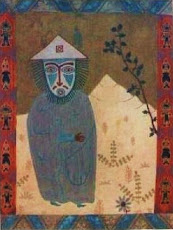
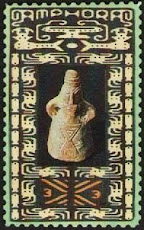
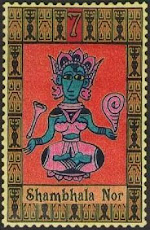
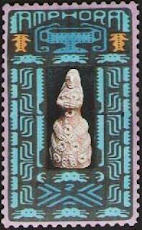
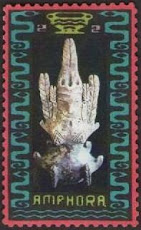
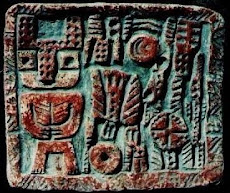
edtions of 100, plus ten artist's proofs each 60 x 89 mm. Copyright by the artist.
These stamps could be called by a variety of names, including: artist stamps, artistamps, cinderella stamps, fantasy stamps, faux postage, mail art, or micronation stamps.
Shambhala Nor could be interpreted as a "micronation" from my own imagination.
William Blake once said that "Nature is the Imagination." In this he was paralleling the
Buddhist idea that everything we experience is a projection of Maya.
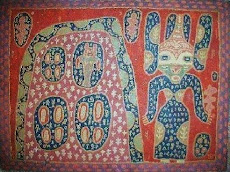
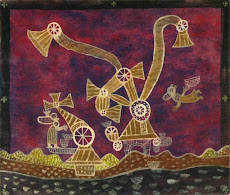
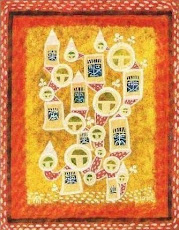
Featured are meditation images based on Himalayan Buddhist folk art as rendered by myself--using ink on paper and collage, with border designs created on an antique 1980's word processor.
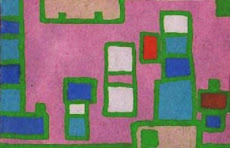
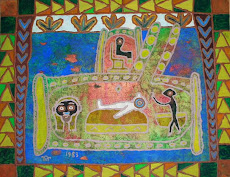
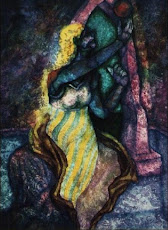
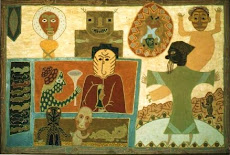
1986 by Eric Whollem gouache and wax resist on paper Collection of the artist. 8.5" x 11" Copyright by the artist.
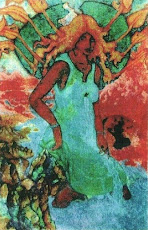
The Naiad
Here the Naiad sits by the pool, her cup of wisdom not far off.
It is springtime and the oak has sent forth it's first new leaf.
The Naiad is the oracle of the pool. She speaks only in fresh,
green verse.
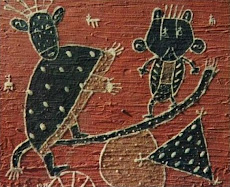
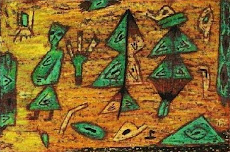
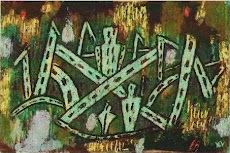
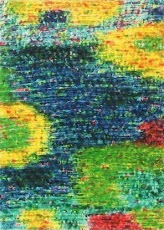
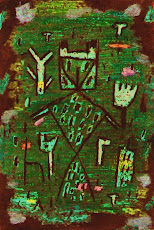
1985 by Eric Whollem India ink, watercolor and wax resist on paper Collection of the artist. 9" x 6" Copyright by the artist.
Thought Forms
Leadbeater and Besant wrote a highly influential book called Thought Forms, still in print from the Theosophical
Publishing House. These writers worked with a group of
sensitives and determined that the emotions and thoughts of
the human mind appear as distinct shapes with defining colors.
Abstract images appeared as illustrations in this book.
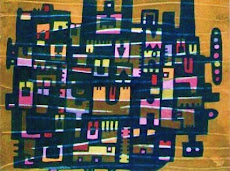
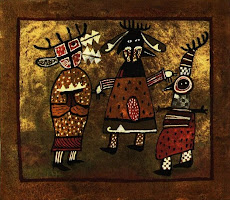
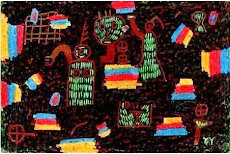
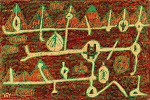
1980 by Eric Whollem earth paints, polyvinyl resin, acrylic and watercolor on paper Collection of the artist. 7 3/8" x 10 1/16" Copyright by the artist.
NATIVE AMERICAN PICTOGRAPHIC ART
For many years I have been a student of American Indian
rock art. Also pottery design and pictographic images
painted on rawhide have been of immense interest to me.
I am not Native American, but have lived in close proximity
to Indian families--notably of the Concow Maidu Indains
of Butte County, California.
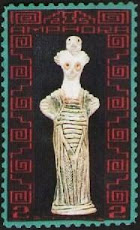
Kore means maiden in Greek. Images of a maiden,
usually with her feet close together are commonly
seen in the archaic art of Greece. The maiden was
a perfect symbol for use in allegories of the Goddess
and Nature.
This stamp is a link to Merreminde stamps and covers.
CITY OF THE MOON
Cudley was a lunar explorer who established a number of parks and national monuments on the Moon. This stamp was issued by the City of the Moon, a colony of refugees from the Moon, who had returned to earth. The image is a link to more posts on these topics.
FANTASY MAPS
When I was a boy I found great delight in creating maps of fantasy countries....I still am at it, having created various ephemeral continents, island nations and various interdimensional and interplanetary countries. This link will take you to my Google Photo map album.
Clicking on the above icon will take you to my Youtube Channel where you can find Uploads of my art and stamp videos. Also those interested in international ethnic music may enjoy my Playlist Collection of world music.
ERIC'S BLOG SEARCH
Click on the labels below to pull up posts by Eric on topics of your choice.
This map stamp of Undinia is a link to my posts on stamps of this region. Islands off the coast such as Tebu, Watta and Worro Worro also issue stamps.
STAMPS OF THE GRAND DUCHY OF GUGUWUPH
These revenue stamps form a link for my posts of Guguwuphian stamp material..
LEMURIAN STAMP COVERS
This cover celebrating James Chuchward is a link to my Lemurian posts.
CITY OF THE MOON CINDERELLA STAMPS
Quantus Qwo is the postmaster of City of the Moon. This image is a link to posts about this colony of Lunar refugees.
BARBARU COAST STAMPS
The Barbaru Coast was known as a remote and unexplored region of southeastern Amphora until the times of Scarabeus Binkel's expedition.This stamp from the Hill Tribes Postal Union is a link to blog posts on stamps and covers from the Barbaru Coast.
STAMPS OF THE LOST CONTINENT OF OGYGIA
Ogygia is an archaic name of an island traditionally designated as Atlantis. The stamps above are a link to my blog posts on this topic.
GROT EUBIA
This fantasy stamp cover is a link to my Grot Eubian posts.
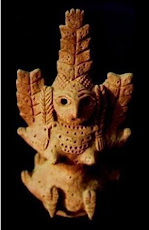
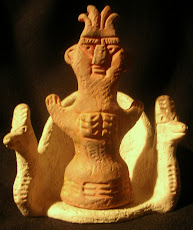
A FIGURATIVE CERAMIC GODDESS SCULPTURE
Goddess by Eric Whollem. This image is a link to my posts on ceramic art.
MY GOOGLE PHOTO ALBUMS: Sculpture, Paintings, Digital Art, Stamps.
Click on above photo to access files. These images were formerly known as Picasa Web Albums. An archive of images used on Blogger.
GEOMETRIC ABSTRACTIONS
"Pink Suite" by Eric Whollem. This painting is painted with earh paints and gouache. This image is a link to 'Geometric Abstractions.'
METTAGUNDY STAMPS AND COVERS
This stamp takes you on a cybernetic voyage to Mettagundy, where the lineage of the monarchy is tied into the forgotten true history of Kilroy. LOL
EARLY CALIFORNIA FANTASY LOCAL POST STAMPS
I have created fantasy stamps for various places in California. These include Ponderosa Way Local Courier Post, the Farallon Islands, special stamps for Black Bart's private post, and issues for the town of Rough and Ready, as well as early Kuksu locals. This pair of stamps serves as a link to posts on this topic.
EARTH PAINTINGS
"Earth Mother" by Eric Whollem. Made with hand gathered minerals, charcoal and ash, ground in a mortar, This image links to 'Earth paints.'
THE HISTORY OF ARTISTAMPS
This link will take you to this historical article, which takes a look at the fantasy stamps of the 19th century and today.
PIRATE STAMPS
This postal currency issue of New West Digbyland is a link to my stamps and covers from fantasy pirate enclaves
HANDMADE STAMP COVERS
The images in this album can be enlarged for easy viewing.These covers are created with laser edition stamps. In previous years I have created digital stamp covers; but these are physical. Click on image to access the album.
ALBUM OF CYBER ART STAMP COVERS
The photos in this album can be easily enlarged for easy viewing. These covers are paraphilatelic digital fantasies. Click on image above to access this album.
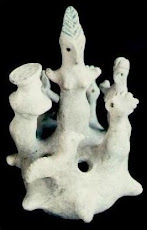
FIGURATIVE CERAMIC SCULPTURE: Hand Built Creations by Eric Whollem
'Seated Figure.' Oxides on white earthenware clay. Click on this image to view my posts on sculpture.
STAMPS OF EBERWONIA
Ebberwonia is a nation found on the Continent of Eronyk. These merchant marine issues serve as a link to my blog posts for Ebberwonia and it's colonial possessions, such as the Ebberwoniaan Kongo.,
EARTH PIGMENTS GATHERED IN NATURE: earth paints used in painting and ceramic sculpture
'The Brothers' by Eric Whollem. This painting was painted with a stick brush. I used milk glue as a binder. This image is a link to my posts on earth painting.
NATIVE AMERICAN TRIBAL STAMPS
This link will take you to a philatelic article about Native American stamp issues.
MIXED MEDIA PAINTINGS
'Garden of the Turtle' by Eric Whollem. This image is a link to my posts on figurative abstraction.
GEOMETRIC ABSTRACTIONS: nonrepresentational visions from the twentieth century
'Box Blocks' by Eric Whollem, 1981. Gouache and found earth pigments on paper. Image links to my gallery of abstract art.
MYTHOGRAPHIC SCULPTURE: A post on Myth as it is used by sculptors and artists
'Bean Sidhe' a Goddess figurine by Eric Whollem. This image is a link to the article above.
CONCOW MAIDU FAUX POSTAGE STAMPS: cyberstamp editions from Maidem Kodom
'Ooti, the Acorn' by Eric Whollem; Concow Maidu Language and Culture. This image is a link to my Maidu artist stamp gallery.
ALBUM OF CERAMIC SCULPTURES
This album shows the range of sculptural art that I have created over the years. Click on photo to access the album.
DIGITAL PAINTING
'Stratosphere' by Eric Whollem
THE KING OF THE WOOD: an earth painting celebrating the legendary King of Nemi
This painting from 1974 was painted in natural earth pigments, charcoal, and ash paint on panel. The subject of the painting is the guardian of the Golden Bough. This image is a link to my post on this painting.
FIGURATIVE EXPRESSIONISM
'The Divine Expression' by Eric Whollem. This image is a link to my posts on Expressionism.
VILA/ A figurative ceramic sculpture rooted in images of Bird Woman from ancient Eastern Europe
'Vila' by Eric Whollem, a ceramic interpretation of mermaid lore from the Adriatic Sea. This icon links to my post.
CYBER ART MAIL/ Eric Whollem
This link takes you to my new blog for my fantasy stamp covers and postcards. Virtual cancellations. Fantasy postal markings. Unusual mail courier systems.
NATIVE AMERICAN THEMES
"Luncheon of the Bird People" by Eric Whollem. This icon links to 'Abstract Paintings.'
TEBU ISLAND
This stamp is a link to a post about Tebu Island, colonized by a group of shipwrecked sailors.
CERAMIC SEAHORSE SCULPTURE: a figurative abstraction
'Seahorse' by Eric Whollem. Oxides on white earthenware clay. This icon is a link to my posts on Seahorse Art.
DIGITAL PAINTINGS/ Eric Whollem
This image is a link to my new digital painting blog. New works by Eric Whollem.
SCARABEUS BINKEL POSTER STAMP
Binkel, a rogue stamp dealer, known for his explorations of the Barbaru Coast in search of rare and unusual stamps, created this poster stamp to advertise his various venues, operating out of the Flea Market in Cottonwood. This stamp is a link to Binkel County stamps.
GODDESS' GARDEN by Eric Whollem
This mixed media work incorporating both earth paints and gouache is a link to my posts on figurative abstraction.
A MAP TO SHAMBHALA
This image links to my post of my Shambhala Map. And gives an account of the mystic realms of Uttarakuru as well as the earlier pre-Buddhistic shamanic traditions of Ol mo lung ring.
INITIATION: these posts deal with the mysteries of spiritual growth and illumination.
"Orphic Neophyte" by Eric Whollem. This abstract painting tells the story of the Eleusinian Mysteries. This image links to my posts on Initiation.
STAMPS OF DOGOLAND
Captain Smorkrog Bilgo as seen on this stamp, established a colony called Dogoland in West Merreminde. He operates a tourist industry along the swamps and rivers. This stamp is a link to my post on Dogoland.
'Ocean Mother' by Eric Whollem. This is a mermaid Goddess. My pendants frequently feature 'totem animals.' This icon is a link to my posts of ceramic jewelry centerpieces.
STAMPS OF XAWAR
This image will take you to my posts on the mystic realm of Xawar, which has a yearly Festival of the Sea.
THE BIRDLAND TRIANGLES: cinderella stamps
This artist stamp is a link to my post on the Birdland Post Office.
THE JEWEL DESERT
Native American motifs by Whollem, This image links to my posts on figurative abstraction.
THE BASKET BEARERS
Whimsical abstraction by Eric Whollem. This image is a link to my 'Early Works.'
MYTHOPOETIC SCULPTURE: modern images from our ancient spiritual heritage
'Shrine of Bird Woman' by Eric Whollem. Oxides and found earth on white earthenware clay and terracotta. Image is link to 'ceramic sculpture.'
GARDEN OF THE NIGHT
Pictographic abstraction by Eric Whollem. This abstract painting is a link to posts on my two dimensional art.
CONCOW MAIDU LORE: Faux postage stamps from Maidem Kodom
Spirit of the Deer Man: 'Nem Sumi' or 'Big Deer' by Eric Whollem. An earth painting showing a shamanic mythographic image. This icon is a link to my gallery of Concow Maidu cyberstamps.
PELICAN COURIER MAIL
The Binklish East Merreminde Company was the first to develop pelican postal delivery. This form of delivery was made by pelicans who, being diving birds, operated underwater. Pelican Courier stamps were used all along the Barbaru Coast. The stamps above serve as a link to posts on the subject.
WHIMSICAL ABSTRACTIONS
"Constellation of the Geranium" by Eric Whollem. This pictographic abstraction is a link to my posts on figurative abstraction.
FAUX POSTAGE STAMPS from the mermaid micronation of Undinia
'The Dragon Boat,' a cinderella stamp by Eric Whollem. This stamp is a link to my mermaid micronation stamps of Undinia.
BIRDS AT THE CRUX OF NIGHT
Abstract art by Eric Whollem. This painting links to my posts on figurative abstraction.
CLASSIC ACRYLICS
"Skogsra" by Eric Whollem. This abstract painting is a link to my posts on 'Acrylic Paintings.'
FIGURATIVE ART
"The Turquoise Garden" by Eric Whollem. Digital fairy art. This icon is a link to my posts on 'Fairies.'
MAIDU INDIAN LORE
"Dance of the Kuksu" by Eric Whollem. This abstract painting is a link to 'Maidu Indians.'
SCULPTURE PAINTED WITH VOLCANIC PUMICE FROM MT. SHASTA
Ceramic Goddess Sculpture by Eric Whollem. This icon is a link to my posts on the 'Goddess.'
THE CLOUD GARDEN
Visionary mixed media by Eric Whollem. This abstract painting icon is a link to 'Abstract Art.'
BUDDHIST GODDESS STAMPS
Tara artistamp by Eric Whollem. This artist stamp is a link to Shambhala.
DREAM FARM ROADS
Maidu Indian Lore by Eric Whollem. This icon is a link to posts on the Maidu Indians.
THE ISLAND OF THE MUSE: Cantharidian faux postage stamps
'The Allegory of the Orange' by Eric Whollem. This image is a link to my stamps from the Royal Post Office of Cantharidia
MAIDU INDIAN FANTASY STAMPS AND COVERS
This album presents images of Maidem Kodom stamps that I created. Click on the link here to access the photos.
ANCESTRAL TREE
Whimsical abstract art by Eric Whollem. This icon links to my posts on figurative abstraction.
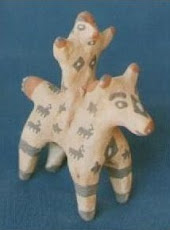
HORSE AND RIDER
Ceramic Sculpture by Eric Whollem. This image of a work painted with natural earth pigments is a link to my posts on ceramic sculpture.
SHRINE OF THE SEA SERPENT GODDESS by Whollem
Figurative ceramic goddess sculpture by Eric Whollem. This icon links to 'Ceramic Sculpture.'
OCEANIC STAMPS by Whollem
"Mother of the Octopi" faux postage stamps by Eric Whollem. This stamp is a link to my posts of artistamps from Amphora.
SURREALISTIC ART
"Rosebone" by Eric Whollem 1972. This image is a link to my posts on acrylic paintings.
FIGURATIVE SCULPTURE
Bird Woman/ Ceramic Goddess Sculpture by Eric Whollem. This icon links to 'Goddess Art.'
PICTOGRAPHIC ABSTRACTIONS: art that uses primordial symbols to convey meaning
'Forest of Hands,' A whimsical watercolor painting by Eric Whollem. This figurative abstraction is a link to my posts on 'Pictographs and Petroglyphs.'
BUDDHIST ART
A cinderella stamp from Shambhala Nor. Faux postage stamps by Eric Whollem. This stamp links to my posts on Shambhala.
THE MYSTERY OF THE MERMAIDS
A book by Eric Whollem. This icon links to my posts on mermaids.
CLASSIC STAMPS OF AMPHORA
"Shakti" by Eric Whollem; faux postage stamps. This stamp icon links to my cinderella stamps from Amphora.
THE ALCHEMY OF INNER EARTH
Modoc petroglyphic art by Eric Whollem. This icon is a link to this post.
STAMPS OF MORUVGACH
Moruvgach is an ancient empire located in West Merreminde. The stamps and cancellation above are a link to my post detailing the postal history of the land.
METAPHYSICAL SCULPTURE
"Parvati;" Faux Postage Stamp by Eric Whollem. Cinderella stamps from Amphora. This stamp links to 'Amphora.'
PICTOGRAPHIC ABSTRACTION
"Autumn Flowers" by EricWhollem. This image links to 'Abstract Art.'
NEFERNEFERLAND STAMPS
These classic stamps were created on an antique word processor. They are a link to my posts on Neferneferland.
ARTIST STAMPS
"Post Rider" by Eric Whollem. This stamp icon links to 'Artist Stamps.'
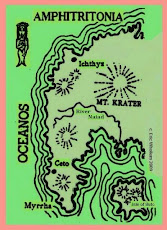
AMPHITRITONIA
A micronation map; Faux Postage Stamps by Eric Whollem. This icon links to 'Maps.'
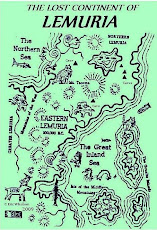
LEMURIAN POSTAL SERVICE
Map of the Lost Continent of Lemuria; Artist Stamps by Eric Whollem. This map icon links to 'Lemuria.'
MERMAID GODDESS STAMPS
"Marina" by EricWhollem. These Goddess faux postage stamps feature a ceramic sculpture by Eric Whollem. This stamp is a link to 'Goddess.'
ATLANTEAN POSTAL UNION
Map of Atlantis by Whollem; faux postage from Atlantis. This icon links to 'Atlantis.'
STAMPS OF SASQUATCHIA
Sasquatchia is an island to the northwest of the Continent of Amphora. It is an independent country ruled by the Sasquatch. However a colony of Dutch colonials have established an outpost in the Wookytown region. And to the far northeast Wook Wook Island has seen the incursion of invaders of Giants from the Empire of the West. The stamp above is a link to Sasquatchia.
FANTASY STAMPS: commemorating Atlantean Textile Design
These Atlantean cinderella stamps by Eric Whollem are a link to posts on 'Atlantis.'
CERAMIC WALLPIECE
"Rabbit Man of the Sea" by EricWhollem. This work based on Irish mythology is an image link to 'Celtic Myth' posts.
BOOBIE BIRD COURIER MAIL
Blythe's Boobie Post was the first to develop mail delivery by boobie bird. These stamps were issued on the Isle of Buto. For a time these provided the only known form of airmail found in the regions of Amphora. The stamps above are a link to the boobie posts.
INDIAN INFLUENCES
"Alaya," an earth painting by Eric Whollem. This icon links to 'Earth Paints.'
MT. SHASTA FOLKLORE: metaphysical art and cinderella stamps.
A Lemurian cinderella stamp by Eric Whollem. This stamp links to my posts of Lemurian faux postage stamps.
ANTHROPOLOGY
Figurative Ceramic Goddess by Eric Whollem. This icon links to my often theoretical posts on anthropology.
WORM HOLE POST
'My Wanderings in the Desert of the Worm' describes these interdimensional fantasy stamps. This stamp sheet links to a post telling the tale.
VIRTUAL STAMP PACKETS
This packet image will take you to my posts of digitally conceived stamp packets. These packets to not exist in physical form, but are digital art.