Saturday, September 18, 2010

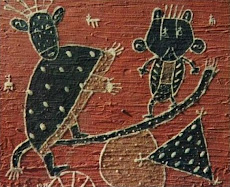
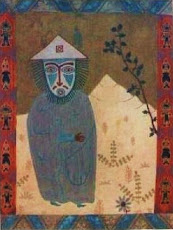
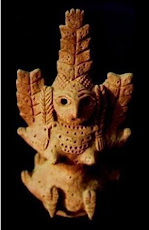
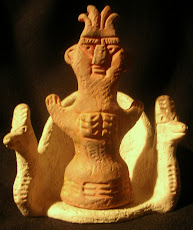
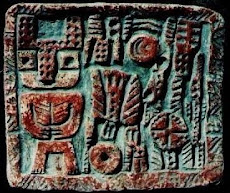
FIGURATIVE CERAMIC SCULPTURE/ Clay Art by Eric Whollem/ 'Devotional Figure in a Shrine'/ Copper carbonate, oxides and found earth on white earthenware clay


Devotional Figure in a Shrine
2007
by Eric Whollem
copper caronate, oxides and found earth
on white earthenware clay
Photo copyright by the artist

CLICK ON IMAGE TO ENLARGE

See my complete list of posts on Ceramic Sculpture on this link:

*
MYTHOGRAPHIC ART
 Metaphysical art, spirituality.
*

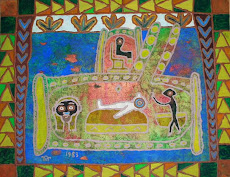
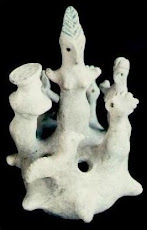
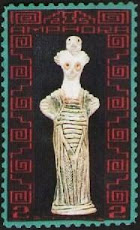
CERAMIC GODDESS SCULPTURE/ Clay Art by Eric Whollem/ 'Seated Goddess in a Triangular Shrine'/ MYTHOGRAPHIC SCULPTURE/ Oxides on white earthenware clay


Seated Goddess in a Triangular Shrine
2007
by Eric Whollem
oxides on white earthenware clay
Photo copyright by the artist

CLICK ON IMAGE TO ENLARGE

See my posts of Ceramic Sculpture on this link:


Ceramic Sculpture Video.                                      

Readers interested in my art that deals with the Goddess concept should view:

*

MYTHOGRAPHIC ART
Metaphysical art, spirituality, the Goddess.

*

Friday, September 17, 2010

Concow Maidu Culture/ OOTI the acorn/ 'EARLY SPANISH CONTACTS WITH THE MAIDU' and 'A BRIEF HISTORY OF OROVILLE'/ Faux postage stamps/ ARTIST STAMPS by Eric Whollem/ Mooretown Provisional Postage from MAIDEM KODOM


Ooti
Maidem Kodom
2010
by Eric Whollem
copyright by the artist


Ooti the Acorn

Ooti is the name given to the staple food of the Maidu, the acorn.
Acorns were made into soup or bread. Sometimes meat or other
seasonings were added.

Manzanita berries also were used to make a sweet bread.

When food supplies got low, the toxic seeds of the buckeye
were carefully leeched to make food.

The Maidu used bedrock mortars and large smooth grinding
stones to grind the acorns, which were then leeched with water
in special baskets.


       CONCOW MAIDU LORE IN THE ART OF ERIC WHOLLEM


EARLY SPANISH CONTACTS WITH THE MAIDU

Today at Powwows or Big Times fry bread has been added to the
Maidu cuisine. This may or may not be an influence that arose
from early Spanish contacts in California. A number of words in
the Concow dialect are Spanish in origin--such as 'pane' for
bread, 'caballo' for horse, and 'pantalon' for pants.

A friend of mine once found a rusted out old Spanish sword on
the shores of Lake Oroville. There are few physical remains of
Spanish colonization in Butte County, as the Spanish usually
preferred lands on the coast.

Concow Maidu Culture/ Indian Reservation Stamps: 'NATIVE AMERICAN TRIBAL STAMPS AND THE FAUX POSTAGE OF MAIDEM KODOM'/ OOTI the acorn/ Artist stamps by E.Whollem/ Cyberstamps based on an ancient California culture


Ooti
Maidem Kodom
2010
by Eric Whollem
copyright by the artist


Native American Tribal Stamps and the Faux Postage of Maidem Kodom

There is a genre of stamps called variously 'Indian Reservation Stamps'
or 'Native American Tribal Stamps.'  The stamps that I have created for
Maidem Kodom, my own fanciful 'Maidu Nation' are not of these
categories, as they are 'faux postage stamps,' or 'phantom cinderellas'
as they might be called by collectors. They are my own artistic creations
and not authorized by any Native American group.

The first Native American group to issue stamps of their own was the
Rosebud Reservation of the Sioux in the 1950's. The Crow Creek
Sioux issued the first pictorial reservation Hunting Stamp in 1989.
See the link below to view these authentic Indian stamps.

Thus far most Native American stamps have either been Hunting
Permit Stamps or Tobacco Tax stamps.

Michael Jaffe wrote an article in which he gives a historical account
of Indian Reservation Stamps. In 1992, Jaffe writes, the Pine Ridge
Reservation of the Oglala Sioux issued some wildlife stamps that
were intended mostly for sale to collectors. This was followed by a
similar issue by the Sisseton Wapeton Sioux Tribe, who similarly
decided to create stamps for philatelic purposes. Most Native
American tribal stamps have been very limited editions of stamps
printed just for hunting and fishing permits.


CONCOW MAIDU FAUX POSTAGE STAMPS

Fantasy stamps have been created by artists for hundreds of years.
The first such stamp was created as a parody of the British Colonial
Tax stamps which aggravated the American Colonists. Subsequently in
1862 George Hussey designed a fantasy local courier post called
the Winan City Post, which caused a sensation among inventive stamp
designers in the 19th century. Copies and varieties of this stamp were
created until the year 1878. 

Since then thousands of faux postage stamps have been designed
by artists. Names for this kind of stamp include: phantoms, artist stamps,
artistamps, cinderella stamps, fantasy stamps, postoids,  
and micronational stamps.

'Maidem Kodom' means 'Land of the People.' It is the name of my
own postal micronation and is not authorized by any tribal
authority.


Ooti
Maidem Kodom
2010
by Eric Whollem
copyright by the artist

CLICK ON IMAGE TO ENLARGE


The 'Mooretown Post Office' and the 'Mooretown Provisional Post' are
artistic liberties I have taken with the creation of these stamps which
are designed with the intention of celebrating Maidu cultural ideas
as they relate to the art that I have created over the years, having
lived, off and on, at Black Earth Village in Feather Falls, California
for about thirty-five years.

The old name for Feather Falls is Mooretown.

*
The art on this stamp is made from earth colors that I gathered myself;
it is a detail of my painting entitled, 'King of the Wood.'

___________

Those interested in depictions of Native American Reservation Stamps should view this link:

Readers interested in Michael Jaffe's article on RESERVATION STAMPS should check this out:

For my own blog post about Native American Tribal Stamps see:

For an account of Faux Postage Stamps see Wikipedia:

For a look at my own  Artist Stamp creations see:

For those interested in Duck Stamps and other Hunting Permit Stamps see this list of links, which is put online by the National Duck Stamp Collectors Society:

Readers interested in Micronation Stamps might want to read:

For my complete gallery of Maidu Indian Faux Postage Stamps see:

*

ARTIST STAMPS
Artistamps, faux postage,
cyberstamps, mail art, micronation stamps,
cinderella stamps,
digital art,
fantasy stamps.

*

Concow Maidu Culture/ OOTI the acorn/ ARTIST POSTER STAMPS by Eric Whollem/ Faux postage from the micronation of Maidem Kodom/ A cinderella CYBERSTAMP from the MOORETOWN POST OFFICE


Ooti
Maidem Kodom
2010
by Eric Whollem
copyright by the artist

One Feather Postage From the Country of the People

Maidem Kodom is my name for the 'postal system' that has issued
these faux postage stamps. Maidem Kodom means 'Country of the
People.'  This postal system is, of course, an extenstion of my artistic
imagination and has no real connection to any tribal authority.

Poster stamps are stamps that are an advertisement for something.
These stamps are, of course, a promotion for my art. . . relating to
the public my interest in and interactions with the Concow Maidu
Indians of Mooretown Ridge in the Feather Falls area of Butte County,
California.

Poster stamps began as a genre of stamps in the late 19th century and
were popular up until the 1940's. Stamp collectors categorize them as
a subvariety of 'cinderella stamps.'

_____________

Readers interested in my articles on Poster Stamps should check out this link:

My posts on the Maidu can be found here:

My general posts on Artistamps may be found on this link:

*
Artist stamps, artistamps, cinderella stamps, cyberstamps, fantasy stamps, faux postage, mail art, micronation stamps, poster stamps.


Thursday, September 16, 2010

THE CONCOW MAIDU SHAMAN/ Usbuki, the Warrior Power/ 'Yeponi: the doctor' / Artist stamps by Eric Whollem/ FAUX POSTAGE from Maidem Kodom, a Native American micronation/ Detail from an earth painting made from natural earth, charcoal and ash paints/ A CYBERSTAMP EDITION


Yeponi
Maidem Kodom
2010
by Eric Whollem
copyright by the artist

The Concow Captain

The modern Concow Maidu Native Americans of Butte County,
California, use the term 'captain' for what is popularly called the
'chief' in common English useage.

Yeponi is the Concow word for shaman. Usually the Maidu use
the expression, 'doctor' to designate the shaman or medicine man.

In that the Maidu culture is based on dream knowledge, the doctor
who has the most wisdom and power in his dreams becomes the
Yeponi, or head shaman. One doctor I talked to said that he could
fly at will in his dreams. He told me that the doctor who was the
best dreamer was the best leader of the people, as he could protect
and lead them properly.

If a person dreams that he is to bring something to a Big Time, he
follows his dream. A 'Big Time' is the popular expression for what
is generally called a Pow Wow.

The religion of the Concow Maidu is called Kuksu and is made up of
a Dream Society of initiates.


USBUKI

Many young people are intitated as warriors. In this initiation, based
on dream, they take on their Usbuki, or warrior power. Usbuki is the
Great White Lizard.

Usbuki is the opposite of Henokano, the Coyote. The old stories tell of
their legendary combat. Coyote is the trickster energy. Usbuki is 
symbolized by the moon. The moon thus represents the world of dream.

It is said that Usbuki lives today in the Middle Fork Canyon in a cave
behind the waters of Feather Falls.  Feather Falls is the second highest
waterfall in the United States, second only to Yosemite Falls. The Middle
Fork of the Feather River is called Supi Poboku in the Conow language.

I have a friend who is Iroquois. She told me that the White Lizard is
found in many Native American traditions; it is a symbol of the power
of dreams. Warrior Power among the Concow Maidu is the same as
Dream Power.


('NOTES: Sewi' means river. Water is 'momih.' Supi Poboku and all the
branches of the Feather River used to be full of salmon. 'Mako' is the name
of  salmon. The Middle Fork is also the location for stories of Woctolly,
the half-human, half salmon merman of Maidu folklore.)


THE SENOI

I recall a quote from an Indian who once said, 'White man does not
dream; he lies.'  This telling statement reveals the depth of respect
given to the dream world among Native Americans.

Today many more people are getting in touch with dreaming. Back in the
1970's there was a popular book that was called, 'Creative Dreaming,'
which detailed the dream culture of the Senoi, a tribe in Malaya.

The Senoi taught every child to recall his dreams and to change things
in them that are bad. By the time the kids are teenagers, they can do
whatever they want in the dreamworld. The Senoi are left alone by
their tribal enemies, as they are considered to be people of great
psychic ability.

______________

Readers interested in my posts on Shamanism might want to see:

This is a link to my posts on the Maidu:

Those who want to see my gallery of Artist Stamps should check out:

Those intersted in my approaches to Earth Paints should see this link:

My posts on Kuksu can be found here:

*
Artist stamps, artistamps, cinderella stamps, cyberstamps, fantasy stamps, faux postage, mail art, micronation stamps. Maidu Indians. Shamanism.

THE CONCOW MAIDU SHAMAN/ Earth Painting Traditions/ 'Yeponi' by Eric Whollem/ A faux postage stamp with a detail from an earth painting made from natural earth pigments/ A CYBERSTAMP EDITION/ Cinderella artist stamps by Eric Whollem


Yeponi
Maidem Kodom
2010
by Eric Whollem
copyright by the artist

Earth Painting

Back when I was in college I discovered the work of David
Villasenor, a Navajo sand painter. At that time I thought to
myself, 'These paintings show that there is hope for art.'

In 1973 I began gathering earth, bark, charcoal, iron pryrites,
sand and other natural materials to make paints from scratch.
I would use milk glue, beeswax, polyvinyl resin, and acrylic
emulsion for a binder for the pigments. I never used linseed oil,
the usual ingredient in artist's oil paints, as I never cared much
for the odor of oil paint.

I even explored inks made from berry juice and other vegetable
dyes.

CONCOW MAIDU FAUX POSTAGE/ 'Yeponi' by Eric Whollem/ Cinderella artist stamps from the micronation of Maidem Kodom: Mooretown Provisional Postage/ A CYBERSTAMP EDITION/ Shamanic Art/ EARTH PAINTING


Yeponi
Maidem Kodom
2010
by Eric Whollem
copyright by the artist

A Sheet of Faux Postage Stamps From Maidem Kodom

These stamps are fantasy micronation stamps from Maidem Kodom,
'The Country of the People.'  They are not real postage stamps, but
what are called 'artistamps.'  Many stamp hobbyists who are artists
enjoy creating such fantasy editions.

Wednesday, September 15, 2010

CONCOW MAIDU FAUX POSTAGE STAMPS/ 'Pano Maidem' by Eric Whollem/ 'THE BEAR DOCTOR'/ Traditional shamanic lore of the Native Americans of Butte County, California/ A cinderella cyber stamp from Maidem Kodom/ ARTIST STAMPS


Pano Maidem
Maidem Kodom
2010
by Eric Whollem
copyright by the artist

Pano the Bear

These faux postage stamps feature a painting that I created with
gouache and parafin and plastic emulsion resist on paper.

'Pano Maidem' means Bear Man in the Concow Maidu dialect. The
black bear is very sacred to the Maidu; and today in Janesville,
California, the Maidu have an intertribal gathering each year for
what is called 'The Bear Dance.'

I once visited the roundhouse in Janesville with Adrian Smith, the
head of the Butte County Tribal Council, back in the 1970's. He was
'Bear,' or lead dancer at one of the Bear Dances. From time to time
different people are chosen as lead dancer.

There are different Bear Doctors in Maidu tradition. The Grizzly
Doctors were greatly feared, but the Black Bear Doctors were
healers. Adrian told me that 'everyone is a doctor.' That is to say
everyone has a special 'power' or abiltiy. Almost everyone is a
dreamer.  'Netdim' means dreaming. The dream is the sacred unity
from which cultural continuity extends. The inititates of the Dream
Society are shamans, or doctors; but the more advanced doctors
are called Yeponi.

Kuksu is the name of the Dream Society, or traditional religious
organization of the Concow Maidu. Moki is the head priest of the
Kuksu Dream Lodge. The Kuksu idea began in Oroville, California
but subsequently spread to other Native American groups across
the state: the Wintun, the Cato, the Pomo, and the Miwok.

______________

Readers interested in my posts on Shamanism might be interested in the following:

To read what I have to say about the Maidu Indians view this link:

Those interested in Dreaming may want to see:


*
Artist stamps, artistamps, cinderella stamps, cyberstamps, fantasy stamps, faux postage, mail art, micronation stamps. Shamanism; mythographic art; mythology; Maidu Indians; dreaming.

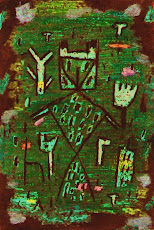
CONCOW MAIDU FAUX POSTAGE STAMPS/ An earth painting made from natural earth, ash, and charcoal/ 'Voice of the Turtle' by Eric Whollem/ THE MAIDU CREATION STORY/ A cinderella cyber stamp edition from the micronation of Maidem Kodom


Voice of the Turtle
Maidem Kodom
2010
by Eric Whollem
copyright by the artist

Voice of the Turtle: an Earth Painting of Ultrama

Ultrama is the Turtle from the Concow Maidu story of creation.
Legend has it that Ultrama dove to the bottom of the sea to bring
up mud, which was used to make the world.

According to Tom Epperson, Maidu storyteller, the realm in which
Ultrama acted was called Kodomyeponi, which I translate as The
World of Shamans. 'Kodom' means 'land;' and 'yeponi' means
'shaman' or 'doctor.'

Maidem Kodom is my own name for the 'Country of the Maidu.'


                                  A video about my earth paints.


The painting on the stamp above was made from natural earth
pigments, charcoal and ash, gathered and processed by myself.
I showed this painting at a Pow Wow in Oroville, California back
in the 1980's when I conducted a workshop on making paints from
earth gathered in nature. Later the work was exhibited at Pacific
Western Traders in Folsom, California.

_______________

Readers interested in Earth Paints should see my posts on the subject:


A video about the Concow Maidu                      

To view my articles on Maidu Indians see this link:

BELOW IS A VIDEO
SHOWING MORE STAMPS OF
MAIDEM KODOM

SPIRIT ANIMALS OF THE CONCOW MAIDU     
             
Those interested in my other Stamp creations may view my posts here:


*
Artist stamps, artistamps, cinderella stamps, cyberstamps, fantasy stamps, faux postage, mail art, micronation stamps. Earth paints; mythology.

'A SHORT HISTORY OF NATIVE AMERICAN TRIBAL STAMPS'/ Concow Maidu Faux Postage Stamps/ 'Ultrama' by Eric Whollem/. . . The story of how Turtle created the world from mud from the bottom of the sea/ A cinderella stamp from the micronation of Maidem Kodom. . . & the 'Mooretown Provisional Post Office'/ Detail from the mixed media painting, 'Garden of the Turtle'/ Gouache and earth paints on paper/ A CYBERSTAMP EDITION/ California Native American Creation Myth


Ultrama
Maidem Kodom
2010
by Eric Whollem
copyright by the artist


The Concow Maidu Story of Creation on a Faux Postage Stamp


A SHORT HISTORY OF NATIVE AMERICAN TRIBAL STAMPS

Quite a few Native American tribal stamps have been created by
Indian Nations. Some of them are reservation hunting permit stamps.
Such items are attractive to stamp collectors. Duck Stamps, issued by
the US government have a huge following among collectors. And as
for cinderella faux postage stamps, there are societies and clubs
dedicated to their study.

The first Native American tribal stamps were issued by the Rosebud
Sioux in the 1950's. These were hunting permit stamps.


The Crow Creek Sioux have issued a number of Duck Hunting stamps.
A link at the bottom of my post takes you to the history of these stamps.
There is an amusing story of the Crow Creek people having had a lack 
of interest in helping stamp collectors purchase their stamps, which were
issued for a practical purpose. Stamp collectors have been made to wait
until after hunting season is over to get copies of the stamps, which were
made for hunters, not collectors. [See the Arago link below, where you can
read an informative article by Jeanette Cantrell Rudy.]


Tribal stamps were first issued in the 1950's, but the first stamps with
images instead of mere text appered in 1989--with the Crow Creek
People. These stamps show flying birds.


In my links below you can find examples of  fantasy Native American
tribal stamps, such as those from the Republic of Timucua. These are
called 'micronation stamps' by collectors. There are quite a few
micronations online. It is creative genre, not always geared just to stamps.

Developers of a micronation go to various lengths to invent a history and
culture for their imaginary land. This genre of creativity is found in
organizations like the Society For Creative Anachronism, whose
members try to recreate the Middle Ages.


Also you can find a link to authentic tribal stamps from a dealer who
specializes in them for collectors. (This is Jaffe Stamps, who acquired the
Brookman Stamp Company, & has a complete online catalog of known
Indian Reservation Stamps). 


These authentic tribal stamps and the  fantasy issues mentioned above
are all classified as 'cinderella stamps' by stamp collectors. A cinderella is
any sort of non-postage stamp, including Christmas seals, revenue stamps,
and Duck Hunting Permit Stamps, as well as faux postage stamps or
micronation stamps. The stamps from Timucua are 'faux postage stamps,'  
as they are purely artistic creations.


Asskosskoss
Maidem Kodom
2010
by Eric Whollem
copyright by the artist

CLICK ON IMAGE TO ENLARGE

My own issues from Maidem Kodom and the Mooretown Provisional Post
Office are all micronational stamps--faux postage stamps that are
educational and informative . . . ana a way of sharing with the world my art
that relates to Concow Maidu culture.


Voice of the Turtle
Maidem Kodom
2010
by Eric Whollem
copyright by the artist
CLICK ON IMAGE TO ENLARGE


NOTES ON MY MAIDEM KODOM STAMPS

My art for many of these designs was in part made from natural earth
pigments--and sometimes in conjuction with opaque watercolors.

The brief synopsis of the story of Ultrama, the Turtle is found  in the
margins of this Turtle stamp I created for an idealized Maidu postal service,
which I have dubbed 'The Mooretown Provisional Post Office.'

As you see here I have included Spirit of the Deer Man and, Asskosskoss
the Jay among the images on my artist stamps.


Sumi Maidem Kakini
Maidem Kodom
2010
by Eric Whollem
copyright by the artist

CLICK ON IMAGE TO ENLARGE


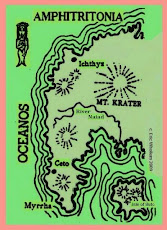
Actually I began creating faux postage stamps up in Feather Falls back
in 1999. Subsequently I have created quite a few imaginary stamp issuing
countries--from Amphitritonia to Undinia.  My Maidem Kodom stamps
are special because they reflect the language and customs of a real
culture, at least as interpreted by myself. I apologize for any grammatical
or informational errors which may appear in my work and writings.


Netdim Kakinim
Maidem Kodom
2010
by Eric Whollem
copyright by the artist
CLICK ON IMAGE TO ENLARGE


A PARALLEL OF CONCOW MAIDU LEGEND WITH HINDU SCRIPTURE


Tom Epperson, a Maidu storyteller, has given us the most comprehensive
account of the original Concow Maidu cultural legends. A link at the bottom
of this post takes you to an original recording of Mr. Epperson singing a
version of the Maidu Creation Story.

The Maidu account of Creation is similar to that found in India, where the
first incarnation of Vishnu was Kurma, the Tortoise.

There is another Hindu Myth that recalls the Maidu Creation Story--the legend
of Bhu. In this story Bhu, the Earth Goddess, is held captive at the bottom of
the sea. Narasimha, the Manlion, (the third incarnation of Vishnu) rescues her
from the clutches of Makara, the Sea King. This story is found in the Puranas.

'Bhu' means earth in the sense of dense matter. In this her story parallels
the Maidu legend where mud is brought up from the bottom of the sea by
Ultrama the Turtle.


     CONCOW MAIDU CULTURE VIDEO BY WHOLLEM


ANOTHER ANCIENT STORY OF CREATON SET AT THE OCEAN FLOOR

Interestingly enough, in the Gnostic Gospels found at Nat Hammadi in Egypt
there is an account of Genesis wherein the Garden of Eden is at the bottom
of the sea. The story relates that Adam was created as a reflection on the
water. Here we have the oceanic element, but Adam is a mental creation,
rather than a physical creation from clay or mud.

Thus the Maidu Creation Story has various parallels in different parts of the
world. Some story elements are similar. But the Maidu story is unique. . . and
quite different from other legends found among tribal groups in early California.

_____________________

    
Those wanting to read a similar post that talks about Indian Reservation Stamps see:
http://artblogericwhollem.blogspot.com/2010/09/concow-maidu-culture-indian-reservation.html
Read about Artistamps on Wikipedia for information:
To understand the concept of  the Micronation of Maidem Kodom see:
For a site that gives us a Creation song by Tom Epperson, go to this link:
http://honeylakemaidu.org/creation.html

To see the CROW CREEK Sioux Hunting Stamps go
to this link:
http://arago.si.edu/index.asp?con=2&cmd=1&id=187106

For look at the fantasy stamps of The Republic of Timucua take a peek at this link:

Readers interested in a site with a of a comlete list of  authentic Tribal Stamps should see this link:

My own online posts of my faux postage stamps can be found on this link:

BELOW IS A SAMPLE
ARTISTAMP
VIDEO
FROM MY ARCHIVES
(See Eric Whollem's
 Youtube Channel)

ARTIST STAMPS FROM LEMURIA              

ERIC WHOLLEM                            


*
Artist stamps, artistamps, cinderella stamps, cyberstamps, fantasy stamps, faux postage, mail art, micronation stamps. Mythology.